
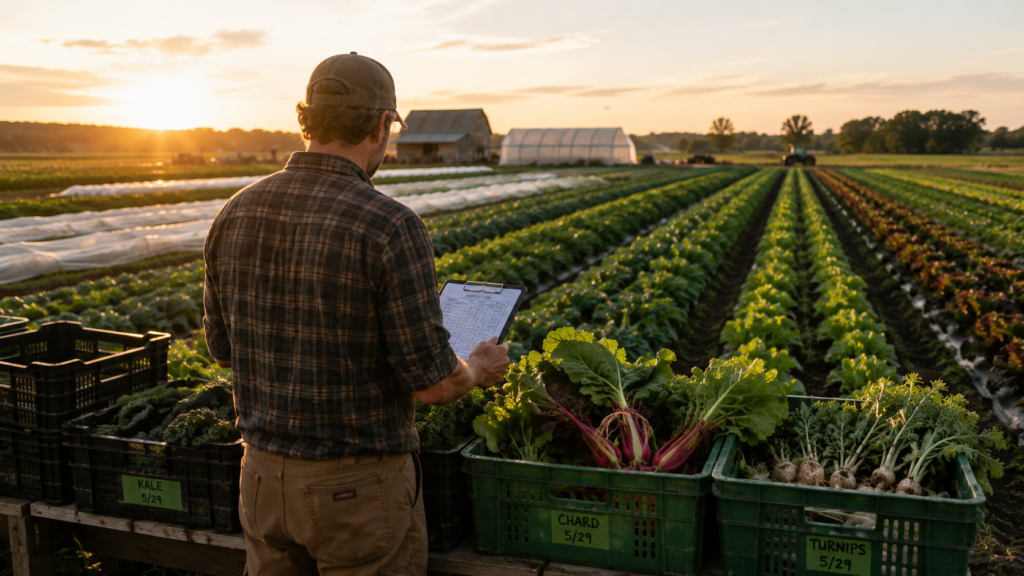
Organic harvest records are one of the most important parts of an organic farm’s documentation. Inspectors review harvest records to verify that crops can be traced from the field through storage and eventually to the buyer.
Fortunately, keeping accurate organic harvest records doesn’t have to be difficult. Recording harvest information while the work is happening makes certification easier and helps prevent missing paperwork later.
What Are Organic Harvest Records?
Organic harvest records document every harvest completed on the farm.
They create a clear history showing:
- what was harvested
- when it was harvested
- where it was harvested
- how much was harvested
- where the crop went afterward
Together, these records help demonstrate that certified organic products remain traceable throughout the production process.
Why Harvest Records Matter
Harvest records do more than document production.
They also help inspectors verify:
- field histories
- crop yields
- storage records
- sales records
- traceability
As a result, accurate harvest records become one of the strongest pieces of evidence during an organic inspection.
Organic certification depends on maintaining complete records throughout the growing season, including harvest documentation required under the National Organic Program (NOP).
What Information Should You Record?
Most organic farms should document:
- Crop name
- Variety
- Harvest date
- Field or location
- Quantity harvested
- Unit of measurement
- Person who harvested the crop
- Storage location
- Notes about crop quality (if needed)
Recording this information consistently creates a complete harvest history that inspectors can easily review.
For a broader overview of required documentation, read our guide on What Records Organic Farmers Need to Keep for Certification.
Keep Supporting Documentation
Harvest records work best when they include supporting documents such as:
- packing logs
- storage records
- inventory records
- delivery records
- sales receipts
These documents help verify the information recorded in your harvest log.
Connect Harvest Records to Other Farm Records
Harvest records should not exist by themselves.
Instead, connect them with:
- seed records
- planting records
- field activity logs
- input application records
- sales records
When every record connects together, inspectors can easily follow the crop from planting through harvest and final sale.
Common Harvest Recordkeeping Mistakes
Some of the most common mistakes include:
- Recording harvests several days later
- Forgetting quantities harvested
- Using different field names on different records
- Missing storage locations
- Losing harvest notebooks
- Keeping harvest records in multiple places
Fortunately, recording harvest information immediately after picking helps prevent most of these issues.
Tips for Better Harvest Records
Good harvest records become much easier when farmers build simple daily habits.
For example:
- Record harvests before leaving the field.
- Use the same field names every time.
- Save packing and delivery records together.
- Keep digital copies of important documents.
- Review records regularly throughout the season.
Small habits throughout the year make certification preparation much less stressful.
If you’re building a complete documentation system, our Organic Farm Record Keeping Templates for Certification can help organize harvest records alongside other farm activities.
Frequently Asked Questions
→ Why are harvest records important for organic certification?
Harvest records help inspectors verify production, traceability, and compliance with USDA organic certification requirements.
→ Should every harvest be recorded?
Yes. Recording every harvest creates a complete production history and supports accurate certification records.
→ How long should harvest records be kept?
Most certification records should be maintained for at least five years as part of your overall organic recordkeeping system.
→ Can digital harvest records be used?
Yes. Digital systems are commonly used as long as records remain organized, accurate, and accessible during inspections.
Organic harvest records do much more than document what was picked. Instead, they help connect planting, production, storage, and sales into one complete recordkeeping system.
As a result, inspectors can verify compliance more efficiently and farmers spend less time reconstructing information before certification.
By recording harvest information consistently throughout the season, you’ll build a stronger organic recordkeeping system that’s easier to manage year after year.
