
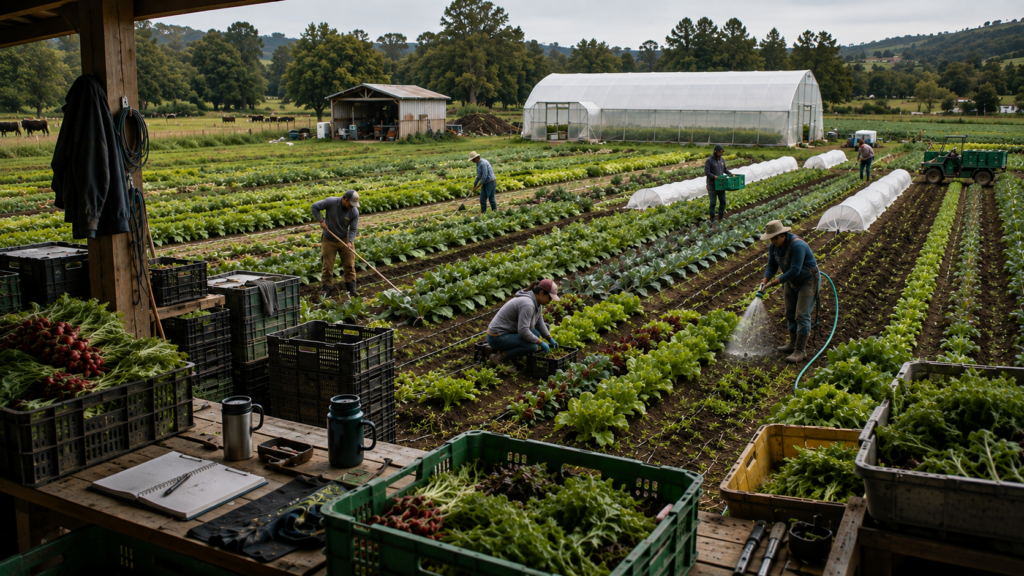
Organic field activity logs are one of the most valuable records an organic farm can maintain. They document the daily work performed in each field and help create a complete history of your farming practices throughout the season.
Fortunately, keeping accurate field activity logs doesn’t have to be complicated. Recording activities as they happen makes organic certification easier and reduces the risk of forgetting important details before an inspection.
What Are Organic Field Activity Logs?
Organic field activity logs record the day-to-day work performed on your farm.
These logs may include activities such as:
- Planting
- Cultivating
- Irrigating
- Weeding
- Mulching
- Pruning
- Harvest preparation
- Equipment cleaning
- Field observations
Together, these records create a timeline that shows how each crop was managed throughout its growing cycle.
Why Organic Field Activity Logs Matter
Daily field records do much more than document farm work.
For example, they also help inspectors verify:
- Crop management practices
- Production timelines
- Field histories
- Organic compliance
- Consistency between other farm records
As a result, complete field activity logs strengthen your overall recordkeeping system and make inspections much more efficient.
Additionally, organic farms should maintain records that support compliance with the National Organic Program (NOP) throughout the growing season.
What Should You Record?
Every farm is different, but most field activity logs should include:
- Date
- Field or location
- Crop
- Activity performed
- Person completing the work
- Equipment used (when applicable)
- Notes or observations
- Weather conditions (if relevant)
Recording this information consistently creates a reliable history that inspectors can easily follow.
For a broader overview of certification records, read our guide on What Records Organic Farmers Need to Keep for Certification.
Keep Field Activities Connected
Field activity logs work best when they connect with your other farm records.
Likewise, connect them with:
- Seed records
- Input application records
- Harvest records
- Sales records
- Storage records
When records support one another, it’s much easier to trace each crop from planting through harvest and final sale.
Common Field Logging Mistakes
Many recordkeeping problems are easy to prevent.
Common mistakes include:
- Recording activities days later
- Forgetting field locations
- Using inconsistent field names
- Leaving out important observations
- Keeping notes in multiple notebooks
- Losing handwritten records
Fortunately, recording activities immediately after the work is completed helps prevent many of these issues.
Tips for Better Organic Field Activity Logs
Building consistent habits makes field logging much easier.
For example, you can:
- Record activities before leaving the field.
- Use the same field names every season.
- Keep notes brief but specific.
- Store digital and paper records together.
- Review logs regularly throughout the growing season.
Small daily habits create more accurate records and make certification preparation much less stressful.
If you’re organizing your documentation system, our Organic Farm Record Keeping Templates for Certification can help keep daily activities organized alongside the rest of your records.
Frequently Asked Questions
→ Why are field activity logs important?
They document daily farm work and help inspectors verify how crops were managed throughout the season.
→ Should every field activity be recorded?
Yes. Recording routine activities creates a more complete history of each crop and supports organic certification.
→ Can digital field logs be used?
Yes. Digital records are widely accepted as long as they remain organized, accurate, and accessible during inspections.
→ How long should field activity logs be kept?
Most certification records should be maintained for at least five years as part of your overall organic recordkeeping system.
Organic field activity logs do more than record daily work. Instead, they provide the timeline that connects planting, crop management, input applications, harvests, and sales into one complete recordkeeping system.
As a result, inspectors can better understand how your farm operates while you spend less time reconstructing events before certification.
Over time, recording field activities consistently throughout the season, you’ll build a stronger organic recordkeeping system that’s easier to manage year after year.
