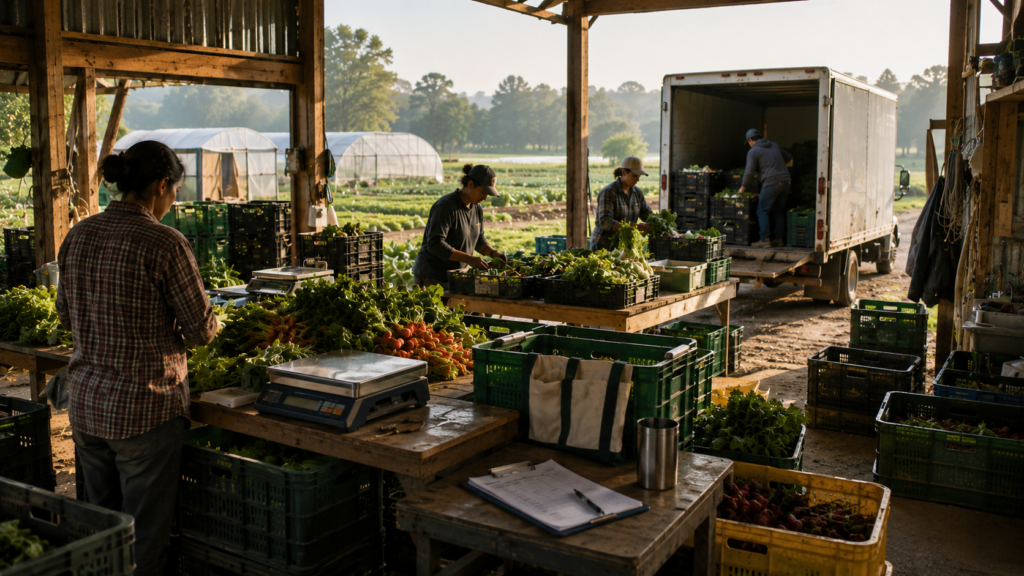
Organic sales records are an essential part of every organic farm’s documentation system. They show where harvested products go after leaving the farm and help create a complete record from planting through final sale.
Fortunately, maintaining organized sales records doesn’t have to be complicated. Recording every sale as it happens helps support organic certification, improves traceability, and reduces paperwork before inspections.
Why Organic Sales Records Matter
Sales records do much more than track income.
They also help inspectors verify:
- Product traceability
- Harvest quantities
- Customer transactions
- Inventory movement
- Organic compliance
As a result, complete sales records help demonstrate that certified organic products remain traceable after harvest.
Organic farms should maintain records that support compliance with the National Organic Program (NOP) throughout every stage of production, including product sales.
What Information Should Organic Sales Records Include?
Every sale should be documented consistently.
Most farms should record:
- Product name
- Variety (when applicable)
- Sale date
- Quantity sold
- Unit of measurement
- Customer or buyer
- Invoice or receipt number
- Lot or batch number (if used)
- Delivery or pickup information
Keeping these details together creates a reliable sales history that inspectors can easily follow.
For a broader overview of required documentation, read our guide on What Records Organic Farmers Need to Keep for Certification.
Keep Supporting Sales Documents
Sales records become even more valuable when they’re supported by additional documentation.
Examples include:
- Sales invoices
- Receipts
- Purchase orders
- Delivery records
- Farmers market sales logs
- CSA distribution records
- Shipping documents
Together, these documents help verify the information recorded in your sales log.
Connect Sales Records to the Rest of Your Documentation
Sales records should never stand alone.
Instead, connect them with:
- Harvest records
- Field activity logs
- Seed records
- Input application records
- Storage records
When every record connects together, inspectors can easily trace products from the field to the customer.
Common Sales Recordkeeping Mistakes
Many recordkeeping problems are easy to avoid.
Some of the most common include:
- Missing customer information
- Recording sales days later
- Losing invoices or receipts
- Using inconsistent product names
- Forgetting quantities sold
- Keeping sales records in multiple locations
Fortunately, recording each sale immediately helps prevent these issues.
Tips for Better Organic Sales Records
Simple habits make recordkeeping much easier.
For example:
- Record every sale on the same day.
- Use consistent product names.
- Save invoices and receipts together.
- Keep digital backups whenever possible.
- Review sales records regularly.
As a result, preparing for certification becomes much less stressful.
If you’re organizing your entire documentation system, our Organic Farm Record Keeping Templates for Certification can help keep sales records together with harvest and field records.
Frequently Asked Questions
→ Why are sales records important for organic certification?
Sales records help verify where certified organic products were sold and support complete product traceability.
→ Do farmers need receipts for every sale?
Keeping receipts or invoices whenever possible provides valuable supporting documentation during inspections.
→ Can digital sales records be used?
Yes. Digital systems are widely accepted as long as records remain accurate, organized, and accessible.
→ How long should sales records be kept?
Most certification records should be maintained for at least five years as part of your overall organic recordkeeping system.
Organic sales records complete the story of every crop grown on the farm.
Instead, they connect harvests with customers, creating the final link in a complete organic recordkeeping system. As a result, inspectors can verify traceability more efficiently, while farmers spend less time searching for documents before certification.
By recording every sale consistently throughout the season, you’ll build stronger farm records that are easier to manage year after year.
