Organic storage records help farmers track crops after they leave the field. They show what went into storage, where it was kept, how much was stored, and what happened to it afterward.
Good records also help connect harvest information with inventory and sales. As a result, farmers can trace organic products through another important stage of the farm operation.
Fortunately, storage records don’t need to be complicated. A simple, consistent system can make both daily farm management and organic inspections easier.
What Are Organic Storage Records?
Organic storage records document harvested products while they are being stored on the farm.
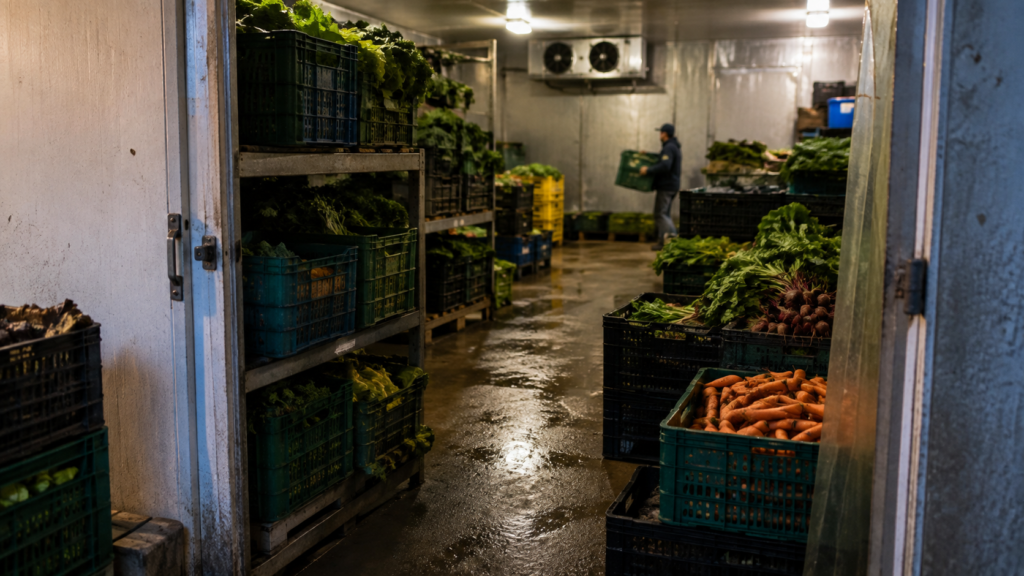
Depending on the operation, storage areas may include:
- Walk-in coolers
- Refrigerated rooms
- Packing sheds
- Dry storage areas
- Warehouses
- Produce bins
- Other designated storage spaces
These records create a clear history of what entered storage and what eventually left it.
Why Organic Storage Records Matter
Once a crop leaves the field, inspectors still need to understand where it went.
Storage records help connect the harvest with the next step in the process. For example, they can help show:
- Which crop entered storage
- Where the crop was stored
- How much product was stored
- When product entered or left storage
- Where the product went next
Therefore, accurate storage records help maintain traceability between harvest and sale.
For certified operations, recordkeeping is also part of the USDA organic requirements. The National Organic Program’s recordkeeping requirements require certified operations to maintain records that fully disclose their activities and transactions.
Storage documentation is only one part of the complete recordkeeping system. Our guide to What Records Organic Farmers Need to Keep for Certification covers the other major records farmers should maintain.
What Should You Include in Organic Storage Records?
The exact information may vary by farm. However, a useful storage log should make it easy to identify and trace stored products.
Consider recording:
- Crop or product name
- Variety, when relevant
- Harvest date
- Date placed into storage
- Quantity
- Unit of measurement
- Storage location
- Lot or batch number, if used
- Date removed from storage
- Quantity removed
- Destination or next step
- Notes about losses or damaged product
Keep the names of crops and storage areas consistent across your records. This makes it much easier to connect information later.
Give Every Storage Area a Consistent Name
A simple naming system can prevent confusion.
For example, if a cooler appears as “Cooler 1” on one record, avoid calling the same space “Main Cooler” somewhere else.
Instead, choose one name and use it everywhere.
The same rule applies to bins, shelves, rooms, and other storage locations. Consistent names make your records easier to follow and help create a clearer audit trail.
Connect Storage Records to Harvest Records
Storage records should pick up where your harvest documentation ends.
Suppose you harvest 150 pounds of carrots from Field 3. Your Organic Harvest Records should show that harvest. Then, your storage records can show where those carrots went after leaving the field.
For example, they might record that the carrots moved into Cooler 2 on the same day.
Now the records tell a connected story:
Field → Harvest → Storage
Later, sales records can add the final step:
Field → Harvest → Storage → Customer
This connection makes product movement easier to trace.
Connect Storage Records to Sales Records
Products don’t stay in storage forever.
When produce leaves a cooler, warehouse, or packing area for sale, the records should make that movement clear.
Your Organic Sales Records can then document the buyer, quantity sold, sale date, and other transaction details.
Together, harvest, storage, and sales records create a stronger traceability system.
Track Product Moving In and Out
Recording only what enters storage can leave gaps.
Instead, track both sides:
- What came in
- What went out
For example, if 200 pounds of produce enter a cooler, your records should eventually help explain what happened to those 200 pounds.
Some may be sold. Some may remain in inventory. Other products may be damaged, spoiled, or discarded.
Recording these changes helps keep quantities clear.
Record Storage Losses Too
Not every harvested product reaches a customer.
Produce may spoil, become damaged, or be removed during sorting. Therefore, farmers should also document significant storage losses when they occur.
A simple entry might include:
- Date
- Product
- Quantity lost
- Storage location
- Reason for loss
This information helps explain differences between harvested, stored, and sold quantities.
It can also make inventory records more accurate.
Prevent Mix-Ups in Shared Storage Areas
Some farms store several products in the same space. Others may handle both organic and non-organic products.
In those situations, clear identification becomes especially important.
Use consistent labels, designated storage locations, or another reliable system to keep products identifiable. In addition, make sure your records match the way products are actually organized in the storage area.
Your documentation should make it easy to determine which product is which and where it came from.
Common Organic Storage Recordkeeping Mistakes
Storage records can become confusing when farmers wait too long to update them.
Common problems include:
- Forgetting when produce entered storage
- Recording products without quantities
- Using inconsistent storage location names
- Failing to record products leaving storage
- Forgetting spoilage or other losses
- Keeping storage information in several different places
- Using product names that don’t match harvest or sales records
Fortunately, most of these problems are easy to prevent.
Update storage records when products move rather than trying to reconstruct those movements later.
Tips for Better Organic Storage Records
A few simple habits can make storage records much easier to maintain.
For example:
- Give each storage area a clear name.
- Record products as soon as they enter storage.
- Record quantities when products leave.
- Use the same crop names across all farm records.
- Document significant losses.
- Keep related records together.
- Review stored quantities regularly.
In addition, connect storage records with your other farm documentation instead of treating them as a separate system.
Our Organic Farm Record Keeping Templates for Certification can help you organize records across different farm activities.
Frequently Asked Questions
→ What are organic storage records?
Organic storage records document harvested products while they are kept in coolers, warehouses, packing areas, or other storage locations.
→ What should farmers record when produce enters storage?
Record the product, quantity, date, storage location, and any identifying information needed to connect it with the harvest.
→ Should farmers record produce leaving storage?
Yes. Recording both incoming and outgoing products creates a clearer history of inventory movement.
→ Should spoiled or damaged produce be documented?
Recording significant losses can help explain differences between harvested, stored, and sold quantities.
→ How long should organic storage records be kept?
USDA organic regulations generally require certified operations to maintain applicable records for at least five years.
Keep the Record Going After Harvest
Harvesting a crop isn’t the end of its recordkeeping trail.
Once produce leaves the field, organic storage records help show where it goes, how much remains, and what happens next. Then, sales records continue that trail to the customer.
When these records work together, farmers get a clearer picture of product movement. More importantly, inspectors can follow that same trail without forcing farmers to piece it together months later.
Consistent storage records turn another everyday farm activity into a clear part of your overall organic recordkeeping system.
