
Planting records for organic farms create a clear history of what was planted, where it was planted, and when it went into the ground. They connect seed purchases with field activities, harvests, and other records throughout the growing season.
Fortunately, planting records can be simple. Recording a few key details at planting time makes it easier to track each crop later. It also helps keep your farm organized and ready for an organic inspection.
What Are Planting Records for Organic Farms?
Planting records document each crop as it enters a field, bed, greenhouse, or other growing area.
Depending on your operation, they may cover:
- Direct seeding
- Transplanting
- Greenhouse planting
- Succession planting
- Cover crop planting
- Replanting after crop loss
Together, these entries create a timeline of what was planted across your farm during the season.
Why Planting Records for Organic Farms Matter
Planting is one of the first steps in a crop’s production history. Therefore, accurate records make it easier to trace that crop as it moves through the season.
Planting records can help show:
- Which crop was planted
- Which variety was used
- Where it was planted
- When planting took place
- How much seed or planting stock was used
- Which seed record connects to the planting
- What happened in that location afterward
As a result, planting records become an important link between your seed records and later field activities.
Certified organic operations must also maintain records that fully disclose their activities and transactions. The National Organic Program’s recordkeeping requirements provide the broader federal requirements for these records.
What Should You Record When Planting?
Every farm works differently. However, a useful planting record should make it easy to identify the crop and growing location.
Consider recording:
- Planting date
- Crop
- Variety
- Field, bed, or location
- Seed or planting stock source
- Lot or batch number, when available
- Amount planted
- Unit of measurement
- Planting method
- Acreage or bed area
- Notes about the planting
You may not need every field for every crop. Still, using the same basic format each time makes your records easier to review.
Use Consistent Field and Location Names
One of the easiest ways to create confusing records is to use different names for the same location.
For example, a farmer might write “North Field” on a planting record but use “Field N” on a harvest record.
Both names may make sense to the farmer. However, someone reviewing the records may not immediately know they refer to the same place.
Instead, choose one name for each field, bed, greenhouse, or growing area and use it consistently.
This simple habit makes your records much easier to connect.
Connect Planting Records to Seed Records
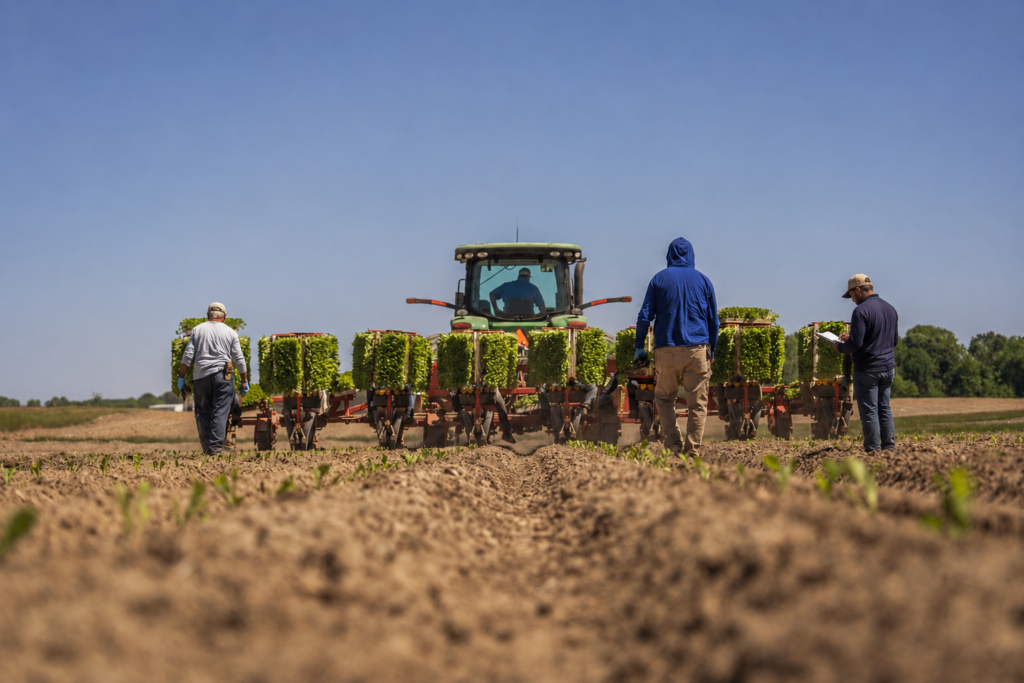
Planting records and seed records serve different purposes, but they should work together.
Seed records document where the seed came from, the variety purchased, and other supporting information. Our guide to Organic Seed Recordkeeping Requirements for Organic Farms explains what information and supporting documents to keep.
Then, the planting record shows when and where that seed was actually used.
For example:
Seed purchase → Planting → Field activity
Later, harvest and sales records continue the trail:
Seed purchase → Planting → Field activity → Harvest → Storage → Sale
This creates a much clearer history of each crop.
Record Direct Seeding and Transplants
Not every crop reaches the field in the same way.
Some crops are seeded directly into the soil. Others begin in trays and move into the field as transplants.
For direct-seeded crops, record the planting date, variety, location, and amount of seed used.
For transplants, you may also want to record the transplant date, source, and growing location.
If you start your own seedlings, keep enough information to connect those plants with the original seed records.
Document Replanting and Succession Plantings
Planting doesn’t always happen once.
A crop may fail to germinate and need to be replanted. Meanwhile, other crops may be planted several times throughout the season to provide a steady harvest.
Record each planting separately.
For example, if you plant lettuce in the same field three times during the season, create three planting entries rather than treating them as one event.
This makes later harvest quantities and field activities much easier to understand.
Connect Planting Records to Field Activity Logs
Once planting is complete, your Organic Field Activity Logs continue the story.
Those records may document activities such as:
- Irrigation
- Weeding
- Cultivation
- Pest monitoring
- Compost applications
- Fertility management
- Crop observations
Because both records use the same field or location names, you can follow what happened to a crop after planting.
As a result, you build a more complete field history.
Connect Planting Records to Harvest Records
Eventually, planting records should connect with what comes out of the field.
Your Organic Harvest Records document the crop, harvest date, location, and quantity harvested.
When planting and harvest records use consistent crop and field names, it’s much easier to connect the beginning and end of the production cycle.
This also helps explain crop yields and production history during an inspection.
Common Planting Recordkeeping Mistakes
Planting records are simple, but small gaps can cause confusion later.
Common mistakes include:
- Waiting several days to record a planting
- Forgetting the variety
- Leaving out the field or bed
- Using inconsistent field names
- Combining several planting dates into one entry
- Failing to document replanting
- Keeping planting information in several notebooks
- Losing the connection between seed and planting records
Fortunately, most of these problems are easy to prevent.
Record each planting as soon as the work is complete.
Tips for Better Planting Records
A few habits can make planting records easier to maintain.
For example:
- Record each planting on the same day.
- Use the same field and crop names every time.
- Keep seed information nearby when recording a planting.
- Record replanting as a separate event.
- Include succession plantings individually.
- Keep digital backups when possible.
- Review records during the season instead of waiting for inspection time.
In addition, keep planting records with the rest of your farm documentation. Our Organic Farm Record Keeping Templates for Certification can help you organize planting records alongside other farm activities.
Frequently Asked Questions
→ What are planting records for organic farms?
Planting records document what crops were planted, when they were planted, and where they were planted. They can also include varieties, seed sources, quantities, and planting methods.
→ Should every planting be recorded?
Yes. Recording individual plantings creates a clearer production history, especially when a crop is planted more than once during the season.
→ Should replanting be recorded?
Yes. Treat replanting as a separate activity so your records accurately reflect what happened in the field.
→ Are seed records and planting records the same thing?
No. Seed records primarily document the seed or planting stock itself. Planting records document when and where that seed or planting stock was used.
→ How long should planting records be kept?
Certified organic operations generally must maintain applicable records for at least five years under USDA organic recordkeeping requirements.
Start the Record When the Crop Goes Into the Ground
Good traceability doesn’t begin at harvest. It starts much earlier.
Planting records for organic farms establish where each crop began. From there, field activity, harvest, storage, and sales records can continue the trail.
By recording planting information as the work happens, you create a clearer crop history. You also spend less time trying to reconstruct dates, locations, and varieties months later.
A few minutes of recordkeeping on planting day can make the entire season easier to document.
